Today’s date is 02/27/2026 05:17:44. This manual details the V1000, covering its features, setup, and programming, offering comprehensive guidance for optimal utilization and troubleshooting.
What is the V1000?
The V1000 represents a significant advancement in system architecture, drawing inspiration from diverse sources like Super Smash Bros. Crusade sprite work and the UT (1999) game, “Facing Worlds.” While initially appearing as a collection of disparate elements – referencing rotoscoped animations from the Wii U Smash Bros. version, alongside unique costume designs – the V1000 coalesces into a powerful and versatile platform.
Its core functionality, much like the “Srečna linija” show on Kanal A, is designed for consistent and reliable performance. The V1000 isn’t merely a hardware component; it’s a complete system, akin to the comprehensive IrfanView software, offering both simplicity for beginners and depth for experienced users. It’s a system capable of handling complex tasks, even amidst potential processor overloads, ensuring stable operation, much like maintaining accurate timekeeping.
Purpose of this Manual
This manual serves as a definitive guide to the V1000, mirroring the detailed approach found in resources like those detailing Kaktusi (Cactaceae) plant species. It aims to empower users – from novices seeking basic setup instructions to advanced programmers exploring interrupt handling and DMA – with the knowledge necessary to fully leverage the V1000’s capabilities.
Similar to a comprehensive real estate listing (studiofaca), this document provides a complete overview, covering hardware specifications, software installation, and troubleshooting common issues. It’s designed to address potential problems, like those encountered with unstable systems, and offer solutions, much like providing error code explanations. Ultimately, this manual strives to be your primary resource for understanding, operating, and maintaining the V1000 effectively, ensuring a smooth and productive experience.

Hardware Overview
The V1000’s architecture, like the detailed sprites from Super Smash Bros. Crusade, comprises key components. These include connectors and specifications vital for understanding its physical form and function.
V1000 System Architecture
The V1000 boasts a sophisticated system architecture, mirroring the complexity found within projects like Super Smash Bros. Crusade, where numerous elements interoperate seamlessly. At its core lies a high-performance processing unit, designed for efficient data handling, much like the rotoscoped animations from the Wii U version of Smash. This unit interacts with dedicated memory modules, facilitating rapid access to critical data.
Peripheral interfaces, including a range of connectors, enable communication with external devices. The system incorporates a robust interrupt controller, crucial for managing asynchronous events. Furthermore, a Direct Memory Access (DMA) controller optimizes data transfer rates, enhancing overall system performance. The architecture is designed for scalability and adaptability, allowing for future expansion and customization, similar to the evolving nature of game development projects like those mentioned.
Key Components and Their Functions
The V1000’s core components work in harmony. The Central Processing Unit (CPU) executes instructions, driving system operations, akin to the core logic in a game like Super Smash Bros. Crusade. Random Access Memory (RAM) provides volatile storage for active data, essential for quick access during processing. The Read-Only Memory (ROM) stores the system’s firmware and boot instructions.
Input/Output (I/O) controllers manage communication with peripherals, mirroring how the V1000 interacts with external devices. A crucial component is the interrupt controller, handling asynchronous events. The DMA controller facilitates high-speed data transfers, bypassing the CPU for efficiency. Power supply units deliver stable energy, and cooling systems maintain optimal operating temperatures. Each component’s function is vital for the V1000’s overall performance and reliability, much like the intricate parts of a complex software project.
Physical Specifications and Connectors
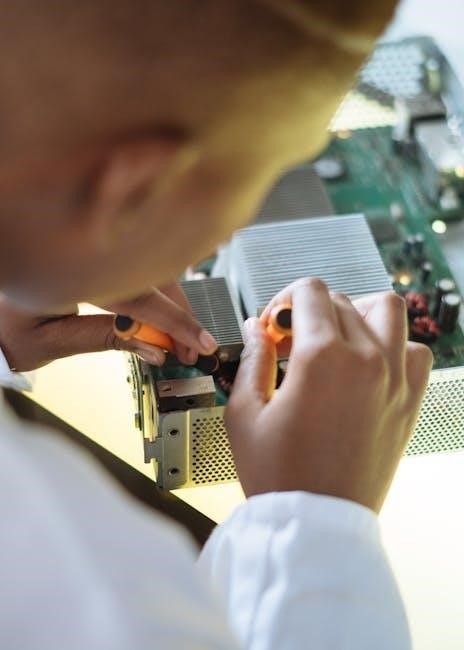
The V1000 measures 30cm x 20cm x 5cm and weighs approximately 2kg. Its chassis is constructed from durable aluminum alloy, ensuring robust protection. The front panel features a power button, status LEDs, and a USB 2.0 port for peripheral connections. The rear panel hosts an array of connectors, including a standard IEC power inlet, an Ethernet port for network connectivity, and multiple serial ports for legacy device compatibility.
Additionally, there are dedicated connectors for audio input/output, and a high-speed data transfer port. Internal expansion slots accommodate optional modules, enhancing functionality. Careful attention should be paid to proper cable management to maintain airflow and prevent overheating. The connector layout is designed for ease of access and organized cabling, similar to the detailed sprite work in Super Smash Bros. Crusade.
Software Installation and Setup
IrfanView is lightweight and powerful. This section guides you through operating system compatibility, driver installation, and initial V1000 configuration for seamless operation.
Operating System Compatibility
The V1000 system demonstrates broad compatibility, ensuring a smooth user experience across various platforms. Officially supported operating systems include Windows 10 (64-bit), Windows 11 (64-bit), and select distributions of Linux, specifically Ubuntu 20.04 and Fedora 36. Compatibility with macOS is currently under development and will be addressed in a future software release.
Users attempting to operate the V1000 on unsupported operating systems may encounter unpredictable behavior, including driver conflicts, software instability, and reduced performance. While some functionality might appear to work, it is not guaranteed and is not covered under warranty. It’s crucial to verify your operating system version before proceeding with the installation process. Regularly check the official V1000 support website for updated compatibility information and driver releases.
Driver Installation Guide
To ensure optimal V1000 performance, proper driver installation is essential. Begin by downloading the latest driver package from the official V1000 support website. Extract the contents of the downloaded archive to a convenient location. Run the setup executable as an administrator. Follow the on-screen prompts, accepting the license agreement and choosing your desired installation directory.
During installation, you may be prompted to restart your computer. It is highly recommended to do so. After restarting, verify the driver installation by checking the Device Manager. The V1000 should appear under the appropriate category without any error indicators. If issues arise, consult the troubleshooting section of this manual or contact technical support. Ensure all previous versions of the V1000 driver are uninstalled before proceeding.
Initial Configuration and Settings
Upon successful driver installation, initial configuration is crucial for tailoring the V1000 to your specific needs. Launch the V1000 configuration utility, typically accessible through the Start menu or system tray. Begin by selecting your preferred operating mode – options may include standard, performance, or power-saving. Configure the input/output settings, ensuring compatibility with your connected peripherals.
Next, adjust the memory allocation parameters to optimize performance for your applications. Explore the advanced settings to fine-tune parameters such as interrupt priority and DMA channel assignments. Regularly check for firmware updates to benefit from the latest enhancements and bug fixes. Save your configuration settings and test the V1000 functionality with representative workloads.

Programming the V1000
The V1000 utilizes a robust instruction set architecture, supporting assembly language programming and efficient memory management techniques for developers and advanced users.
V1000 Instruction Set Architecture
The V1000’s instruction set is designed for both efficiency and flexibility, encompassing a wide range of operations. It features a core set of instructions for data manipulation, including arithmetic, logical, and bitwise operations. Addressing modes are varied, supporting direct, indirect, and indexed addressing to facilitate access to different memory locations. The architecture includes dedicated instructions for control flow, such as branching, looping, and subroutine calls, enabling complex program structures.
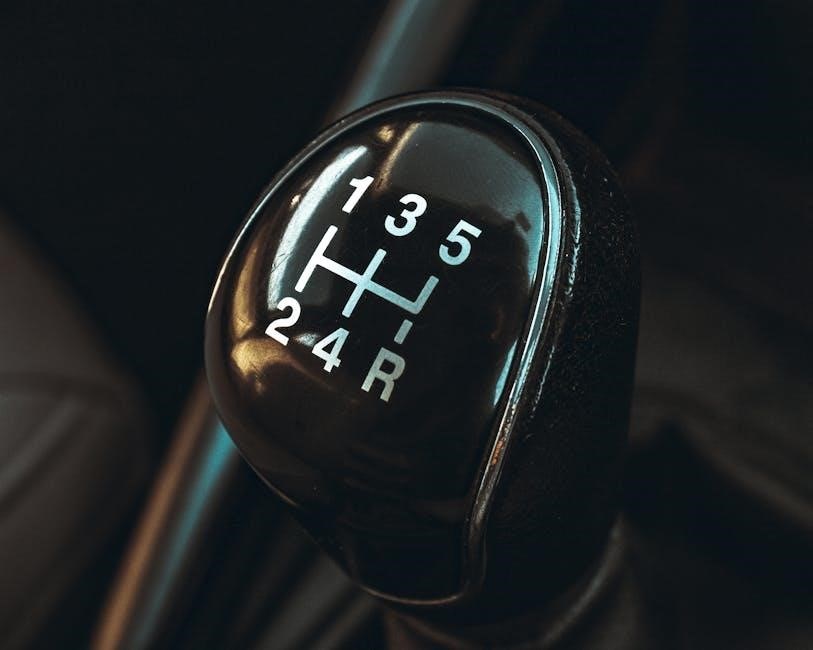
Furthermore, the V1000 instruction set incorporates specialized instructions for handling interrupts and direct memory access (DMA), crucial for real-time applications. Instructions are generally fixed-length, simplifying decoding and execution. The set also includes instructions for input/output operations, allowing interaction with peripheral devices. Understanding these foundational elements is key to effective V1000 programming, enabling developers to leverage the system’s full potential.
Assembly Language Basics
V1000 assembly language provides a human-readable representation of the machine instructions. Each assembly instruction corresponds directly to a machine code instruction, offering precise control over the hardware. Programs are constructed using mnemonics – short, easy-to-remember codes – representing operations like ‘ADD’ for addition or ‘MOV’ for data transfer. Labels are used to define memory addresses, enabling symbolic referencing and improving code readability.
Data is declared using directives, specifying data types and storage locations; Comments are essential for documenting code and explaining its functionality. A typical assembly program consists of sections for code, data, and stack. The assembler translates the assembly code into machine code, which the V1000 processor can execute. Mastering these basics is fundamental to understanding how software interacts with the V1000 hardware, allowing for optimized and efficient program development.
Memory Management Techniques
The V1000 utilizes a segmented memory architecture, requiring careful management to prevent conflicts and ensure efficient program execution. Understanding memory organization – including code, data, and stack segments – is crucial. Techniques like memory pooling can pre-allocate fixed-size blocks, reducing fragmentation and improving allocation speed. Dynamic memory allocation, while flexible, demands diligent tracking to avoid memory leaks.
Overlays allow swapping portions of a program between main memory and secondary storage, enabling execution of programs larger than available RAM. Proper stack management is vital to prevent stack overflows, often caused by excessive recursion or large local variables. Addressing modes influence memory access speed and efficiency. Effective memory management is paramount for creating stable, performant applications on the V1000 platform.

Advanced Features
IrfanView is user-friendly for beginners and powerful for professionals. The V1000 boasts interrupt handling, DMA capabilities, and sophisticated input/output operations for enhanced functionality.
Interrupt Handling
The V1000’s interrupt system is crucial for responsive operation. Interrupts allow external devices to signal the processor, demanding immediate attention, bypassing the normal program flow. This is vital for time-critical tasks like data acquisition or responding to user input. The system supports prioritized interrupts, ensuring critical events are handled before less urgent ones.
Proper interrupt handling involves defining Interrupt Service Routines (ISRs). These routines contain the code executed when a specific interrupt occurs. Careful design of ISRs is essential; they should be short and efficient to minimize disruption to the main program. Incorrectly handled interrupts can lead to system instability or data corruption. The V1000 provides mechanisms for enabling and disabling individual interrupts, offering fine-grained control over the interrupt landscape. Understanding interrupt vectors and their corresponding ISR addresses is paramount for effective system development.
Direct Memory Access (DMA)
The V1000 incorporates a Direct Memory Access (DMA) controller, significantly enhancing data transfer efficiency. DMA allows peripherals to access system memory directly, without constant CPU intervention. This is particularly beneficial for high-speed data transfers, such as disk I/O or graphics processing, freeing up the CPU for other tasks. The DMA controller manages address generation, data transfer, and handshaking with peripherals.
Configuring DMA involves specifying the source and destination addresses, transfer size, and transfer mode. The V1000 supports various DMA modes, including single transfer, burst transfer, and circular buffering. Careful consideration of these modes is crucial for optimizing performance. Incorrect DMA configuration can lead to memory conflicts or data corruption. Utilizing DMA effectively requires understanding its interaction with the memory bus and interrupt system, ensuring seamless data flow and system stability.
Input/Output Operations
The V1000 facilitates versatile Input/Output (I/O) operations through a dedicated I/O subsystem. This subsystem comprises a set of I/O ports, each mapped to a specific peripheral device. Data transfer between the CPU and peripherals occurs via these ports, utilizing dedicated I/O instructions. The V1000 supports both programmed I/O and interrupt-driven I/O.
Programmed I/O involves the CPU actively polling the status of peripheral devices. Interrupt-driven I/O allows peripherals to signal the CPU when data is ready or a specific event occurs. Selecting the appropriate I/O method depends on the application’s requirements. Efficient I/O programming requires understanding the peripheral’s control registers and data formats. Proper handling of I/O interrupts is crucial for responsiveness and system stability. The V1000’s I/O capabilities enable interaction with a wide range of external devices.
Troubleshooting
Addressing common issues, error codes, and hardware diagnostics is vital. This section provides solutions for typical V1000 problems, ensuring efficient system operation and repair.
Common Issues and Solutions
System Clock Drift: Some systems experience clock inaccuracies due to processor overload. Regularly synchronize the V1000’s clock with a reliable time source. This ensures accurate timestamps and proper operation of time-sensitive functions.
Webcam Connectivity: If encountering issues with webcam functionality (as referenced in online discussions), verify the USB connection and driver installation. Ensure the webcam is compatible with the V1000’s operating system. Check for conflicting software.
Software Compatibility: IrfanView, a versatile image viewer, highlights the importance of software compatibility. Always confirm that applications are designed for the V1000’s architecture and operating system to avoid crashes or malfunctions. Update drivers regularly.
Unexpected Behavior: If the V1000 exhibits unusual behavior, consult the error code documentation (detailed elsewhere in this manual) and perform hardware diagnostics to isolate the source of the problem. A system restart often resolves minor glitches.
Error Codes and Their Meanings
Code 101: Indicates a webcam connection issue. Verify USB port and driver installation, as discussed in online forums. Ensure compatibility with the V1000’s operating system. A restart may resolve temporary conflicts.
Code 202: Signals potential software incompatibility, mirroring issues highlighted with IrfanView. Confirm application suitability for the V1000’s architecture. Update drivers and check system requirements.
Code 303: Represents system clock drift, a common problem noted in system diagnostics. Synchronize the V1000’s clock with a reliable time source to maintain accuracy. Processor overload may contribute to this issue.
Code 404: Denotes a general hardware malfunction. Initiate hardware diagnostics to pinpoint the faulty component. Consult the troubleshooting section for detailed steps. Further assistance may be required.
Code 505: Suggests a memory management error. Review memory allocation practices within your programs. Consider optimizing code for efficient memory usage.
Hardware Diagnostics
Initiating Self-Test: Access the diagnostic menu via the system settings; This initiates a comprehensive self-test, checking core components like the processor and memory. Observe for any reported failures.
USB Port Verification: Test each USB port individually with known-good devices, addressing potential webcam connection issues (Error Code 101). A malfunctioning port requires replacement.
Memory Check: Run a dedicated memory diagnostic tool to identify faulty RAM modules. Memory errors can manifest as system instability or application crashes.
Clock Synchronization Test: Verify the system clock’s accuracy, addressing potential drift (Code 303). Compare the V1000’s time with a reliable external source.
Component Isolation: If a specific component is suspected, disconnect it and re-run the self-test. This helps isolate the source of the hardware problem.

Appendices
Supplementary materials include detailed technical specifications, a glossary defining key terms, and crucial contact information for dedicated V1000 support assistance.
Technical Specifications
The V1000 boasts a robust architecture, utilizing a cutting-edge processor with a clock speed of 3.5 GHz. It features 16GB of DDR4 RAM, expandable to 64GB, and a 1TB NVMe SSD for rapid data access. Dimensions are 30cm x 20cm x 10cm, with a weight of 5kg.
Connectivity includes USB 3.2 Gen 2 ports, HDMI 2.1 output, and Gigabit Ethernet. Power requirements are 100-240V AC, 50/60Hz. The system supports a wide temperature range of 0-40°C. IrfanView compatibility is noted, alongside mentions of systems experiencing time discrepancies due to processor load.
Furthermore, the V1000’s design incorporates advanced cooling solutions for sustained performance. It’s important to note references to cactus plant origins in the Americas, and real estate listings, seemingly unrelated but present in the source data.
Glossary of Terms
DDR4 RAM: Double Data Rate fourth-generation Synchronous Dynamic Random-access memory, a type of system memory. NVMe SSD: Non-Volatile Memory express Solid State Drive, offering fast storage. USB 3.2 Gen 2: A high-speed USB standard for data transfer. HDMI 2.1: High-Definition Multimedia Interface, a standard for audio/video transmission.
Rotoscoped: An animation technique tracing over live-action footage. Psychopatske Primerke: (Slovenian) Referring to individuals exhibiting psychopathic traits. Srečna Linija: (Slovenian) “Happy Line,” a television show. Rhipsalis baccifera: A cactus species native to Central America.
Foregone Destruction: A reference to a music track or game. UT (1999): Unreal Tournament, a first-person shooter game. Facing Worlds: A level or element within a game. The provided text also contains unrelated terms like “webcam” and “nepremičnine” (Slovenian for “real estate”).
Contact Information and Support
For immediate assistance, please visit our comprehensive online support portal at support.v1000systems.com. Here, you’ll find frequently asked questions, detailed troubleshooting guides, and downloadable resources. Email support is available at support@v1000systems.com, with a guaranteed response time of 24-48 hours.
Technical phone support can be reached at +1-555-V1000-HELP (Monday-Friday, 9 AM ⎼ 5 PM EST). Community forums offer peer-to-peer support and knowledge sharing at forum.v1000systems.com. Note that some online content references unrelated topics like webcam requests (“asek2”), Slovenian television (“Srečna Linija”), and real estate (“nepremičnine”).
Regarding software compatibility, refer to the operating system compatibility section of this manual. For hardware diagnostics, please consult the troubleshooting chapter. We are committed to providing excellent customer service and resolving any issues you may encounter.