Navigating gym environments can be daunting for women; a tailored plan addresses unique challenges, fostering confidence and achieving fitness goals effectively.
Why a Dedicated Plan is Important
A structured workout plan is crucial for women, combating feelings of intimidation often experienced in gym settings. Many women report feeling out of place or overwhelmed, and a plan provides a sense of direction and purpose. It moves beyond simply ‘showing up’ to actively working towards specific, achievable goals.
Without a plan, workouts can lack focus, potentially leading to inefficient training and increased risk of injury. A dedicated plan considers individual fitness levels, goals (strength, endurance, weight management), and addresses potential barriers like body image concerns or unfamiliarity with equipment. It ensures progressive overload, vital for continued improvement, and promotes consistency – the cornerstone of any successful fitness journey.
Understanding Female Physiology & Training
Women’s bodies differ from men’s, impacting training approaches. Hormonal fluctuations throughout the menstrual cycle influence strength, endurance, and recovery. Understanding these cycles allows for workout adjustments – prioritizing strength training during the follicular phase and focusing on lower intensity during menstruation.
Muscle mass distribution differs, with women generally having less upper body muscle. Plans should address this imbalance with targeted upper body work. Furthermore, women often exhibit greater joint flexibility, requiring attention to proper form and stability to prevent injuries. A well-designed plan acknowledges these physiological nuances, maximizing effectiveness and minimizing risk.
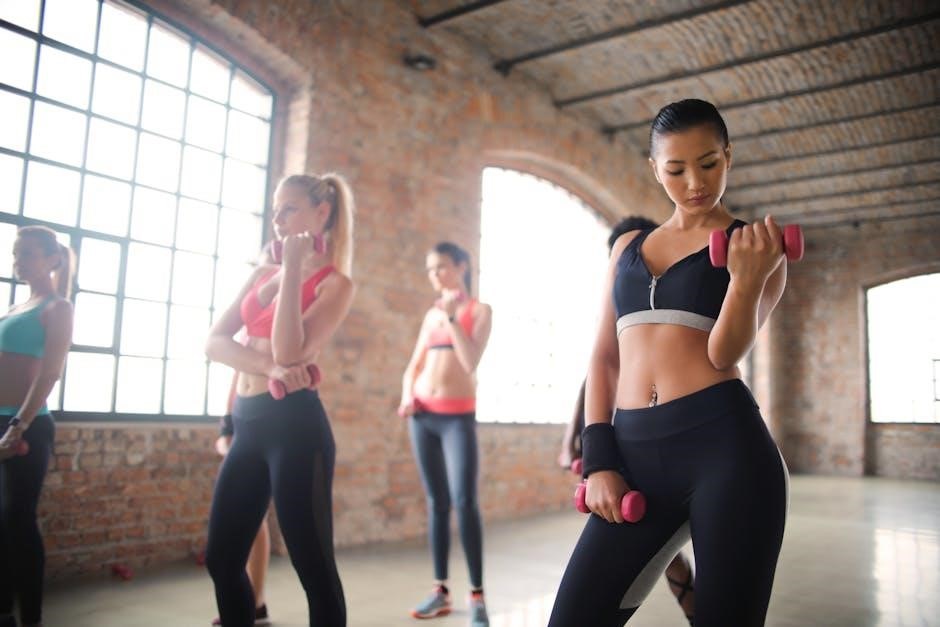
Warm-Up & Mobility (Essential First Steps)
Prioritize dynamic movements and joint preparation to enhance performance, prevent injuries, and increase range of motion before strength training sessions begin.
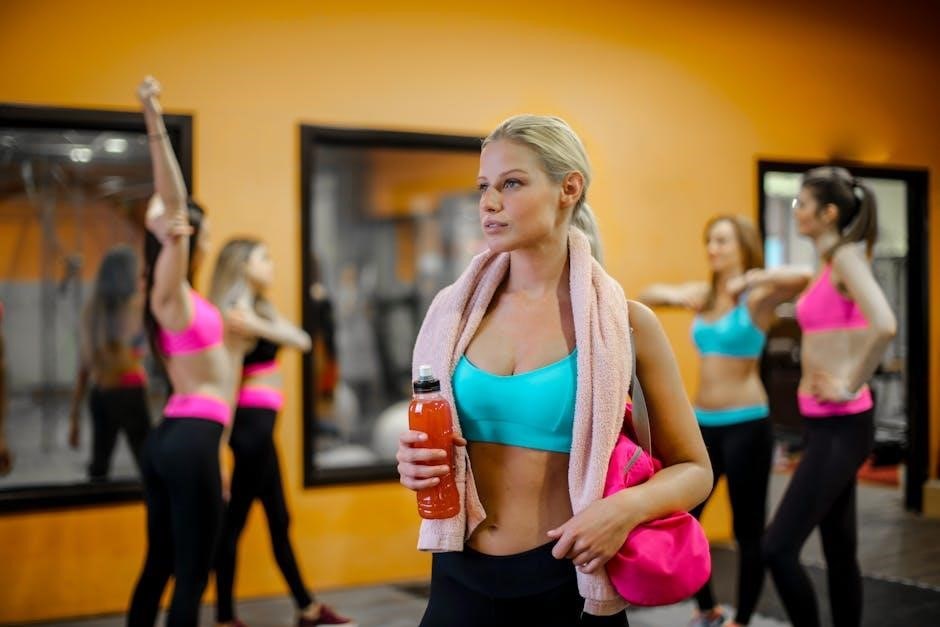
Dynamic Stretching for Women
Dynamic stretching prepares muscles for activity, unlike static stretches which are better suited for cool-downs. Incorporate movements like arm circles, leg swings, torso twists, and walking lunges. These exercises increase blood flow, improve flexibility, and enhance joint mobility, reducing the risk of injury during workouts.
Focus on controlled movements through a full range of motion. For example, perform 10-15 repetitions of each exercise, gradually increasing the range of motion with each repetition. Prioritize movements that mimic the exercises in your planned workout. This targeted approach maximizes the benefits and prepares the specific muscle groups you’ll be using. Remember to breathe deeply throughout each stretch, promoting relaxation and optimal muscle function.
Joint Mobility Exercises
Prioritizing joint health is crucial for women’s fitness, especially when starting a new workout routine. Incorporate exercises like wrist rotations, ankle circles, hip circles, and shoulder dislocations (using a light resistance band if needed). These movements improve the range of motion in your joints, reducing stiffness and preventing injuries.
Perform 10-15 repetitions of each exercise, focusing on controlled, pain-free movements. Pay attention to any areas of tightness or discomfort and spend extra time mobilizing those joints. These exercises are best performed slowly and deliberately, emphasizing quality over quantity. Consistent joint mobility work will enhance your overall movement patterns and support long-term fitness success.
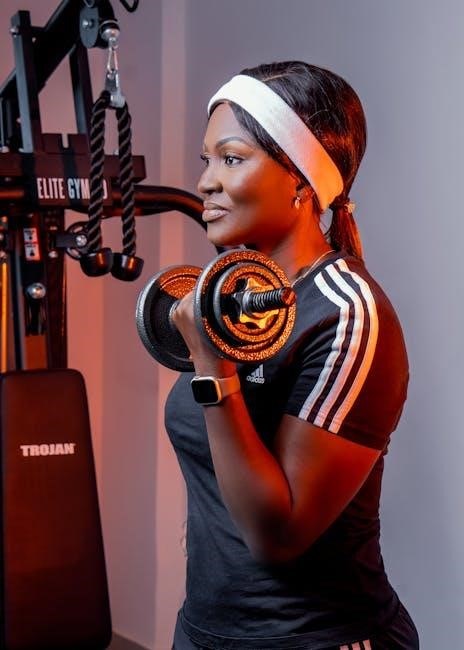
Strength Training for Women: A Comprehensive Approach
Building strength empowers women, combating barriers and fostering confidence; a well-structured plan addresses unique physiological needs for optimal results and injury prevention.
Lower Body Workout (Glutes & Legs)
Prioritizing lower body strength is crucial for overall fitness and functional movement. This workout focuses on sculpting and strengthening the glutes and legs, addressing common areas women often seek to improve. Begin with a dynamic warm-up, preparing muscles for exertion. Incorporate exercises like squats – both bodyweight and weighted – targeting multiple leg muscles simultaneously.
Lunges, with variations such as forward, reverse, and walking lunges, further isolate and strengthen the glutes and thighs. Don’t neglect hamstring curls and calf raises for balanced development. Remember proper form is paramount to prevent injury and maximize effectiveness. Aim for 3-4 sets of 10-12 repetitions for each exercise, adjusting weight as needed to maintain challenge.
Squats & Variations
Squats are a foundational exercise for lower body strength and overall fitness. Begin with bodyweight squats, focusing on proper form: feet shoulder-width apart, chest up, and core engaged. As strength increases, progress to goblet squats, holding a dumbbell or kettlebell close to the chest. Front squats, with the weight held in front of the shoulders, challenge core stability and quad engagement.
Back squats, utilizing a barbell, allow for heavier loads and greater strength gains, but require proper technique and potentially a spotter. Sumo squats, with a wider stance and toes pointed outwards, emphasize inner thigh and glute activation. Incorporate jump squats for a plyometric challenge, enhancing power and explosiveness. Aim for 3-4 sets of 8-12 repetitions.
Lunges & Variations
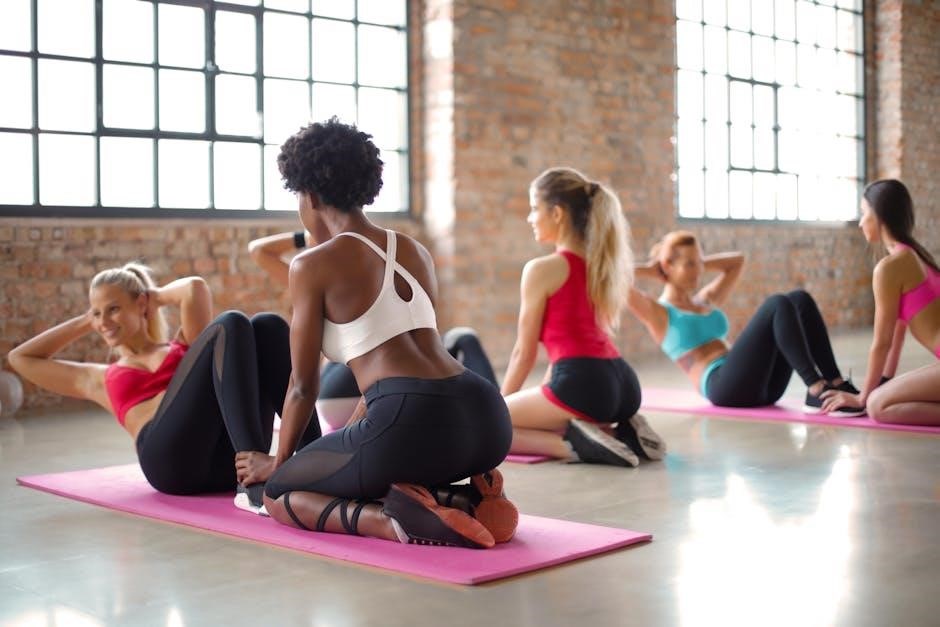
Lunges are excellent for building lower body strength, improving balance, and sculpting glutes. Start with forward lunges, stepping forward with one leg and lowering the body until both knees are bent at 90 degrees. Reverse lunges involve stepping backward, offering a different muscle activation pattern. Walking lunges increase cardiovascular demand and challenge stability.
Lateral lunges target the inner and outer thighs, promoting hip mobility. Add dumbbells or a barbell to increase the intensity. Curtsy lunges work the glutes from a unique angle. Ensure your front knee stays aligned with your ankle and maintain a straight back. Perform 3-4 sets of 10-12 repetitions per leg, focusing on controlled movements.
Upper Body Workout (Chest, Back, Shoulders, Arms)
A well-rounded upper body routine is crucial for balanced strength and posture. Begin with chest exercises like dumbbell chest presses, focusing on controlled lowering and squeezing the chest muscles. Dumbbell rows target the back muscles, promoting good posture and counteracting chest work. Shoulder presses, using dumbbells or a machine, build shoulder strength and definition.
Bicep curls and triceps extensions isolate the arm muscles for targeted growth. Incorporate variations like hammer curls and overhead triceps extensions. Perform 3-4 sets of 10-12 repetitions for each exercise, prioritizing proper form over heavy weight. Remember to engage your core throughout each movement for stability.
Push-Up Progressions
Push-ups are a fantastic compound exercise, but can be challenging for beginners. Start with wall push-ups, gradually decreasing the incline as strength improves. Next, progress to incline push-ups using a bench or sturdy box. Knee push-ups are another excellent modification, reducing the load on your upper body.
Once comfortable with knee push-ups, attempt full push-ups, focusing on maintaining a straight line from head to heels. If full push-ups are too difficult, continue with knee push-ups and work on building strength. Aim for 3 sets of as many repetitions as possible, prioritizing proper form to avoid injury.
Dumbbell Rows
Dumbbell rows are crucial for building a strong and toned back, improving posture and balance. Begin by selecting a weight appropriate for your fitness level – start lighter than you think! Hinge at the hips, keeping your back straight and core engaged. Let the dumbbells hang towards the floor.
Pull the dumbbells up towards your chest, squeezing your shoulder blades together. Lower the dumbbells slowly and with control. Perform 3 sets of 8-12 repetitions per arm. Focus on maintaining proper form throughout the exercise to maximize effectiveness and prevent injury. Vary grip (overhand, underhand) for different muscle activation.
Core Workout (Strengthening the Center)
A strong core is foundational for overall fitness, stability, and injury prevention. Women often benefit from focused core work to support pelvic floor health and improve posture. This section emphasizes exercises that engage all core muscles – rectus abdominis, obliques, and transverse abdominis.
Prioritize controlled movements over speed. Remember to breathe consistently throughout each exercise. Incorporate a variety of exercises to challenge your core from different angles. Consistency is key; aim for 2-3 core workouts per week. Listen to your body and modify exercises as needed to avoid strain.
Plank Variations
Planks are incredibly versatile and effective for core strengthening. Begin with a standard plank, maintaining a straight line from head to heels, engaging your core and glutes; Progress to side planks, targeting obliques – hold for 30-60 seconds per side. Introduce plank taps, alternating tapping shoulders while maintaining stability.
For an added challenge, try plank jacks, jumping feet in and out. Consider forearm planks for a variation that reduces shoulder strain. Remember proper form is crucial; avoid sagging hips or a rounded back. Modify by dropping to your knees if needed, prioritizing core engagement.
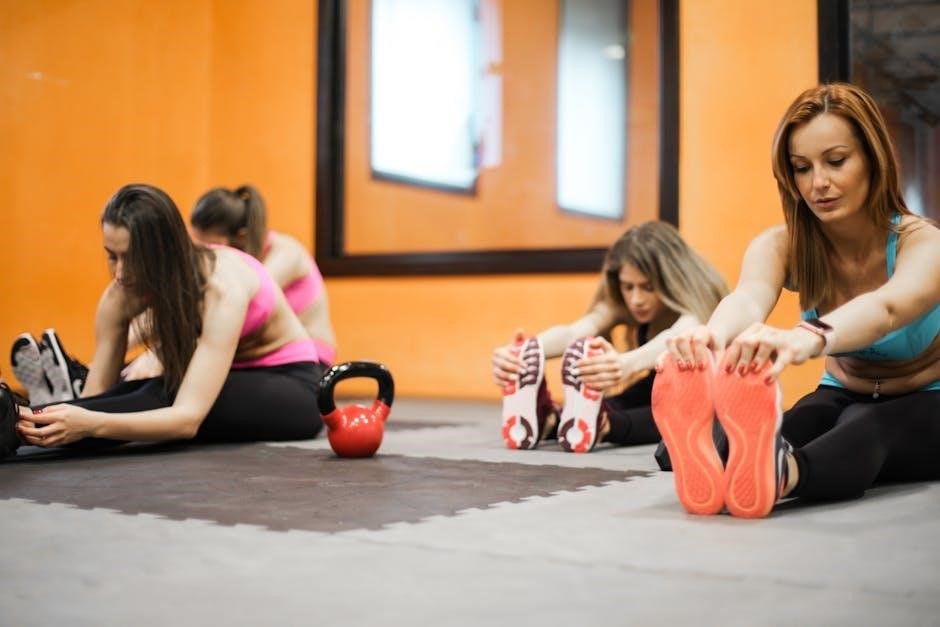
Russian Twists & Leg Raises
Russian twists effectively target obliques and rotational core strength. Sit with knees bent, lean back slightly, and twist your torso from side to side, optionally holding a weight. Focus on controlled movements, engaging your core throughout. Leg raises build lower abdominal strength; lie flat and lift legs towards the ceiling, keeping them straight or slightly bent.
Combine both exercises for a dynamic core circuit. Modify leg raises by bending knees if needed. Avoid swinging momentum; concentrate on controlled contractions. Proper form prevents lower back strain. Aim for 15-20 repetitions per exercise, completing 3-4 sets.
Cardiovascular Training for Women
Cardio boosts metabolism and endurance. Options include HIIT for efficient calorie burn and LISS for sustained effort, supporting overall fitness and well-being.
High-Intensity Interval Training (HIIT)
HIIT involves short bursts of intense exercise followed by brief recovery periods. This method is incredibly effective for women seeking to maximize calorie expenditure in a limited timeframe. A typical HIIT workout might include 30 seconds of sprinting on a treadmill, followed by 60 seconds of walking, repeated for 15-20 minutes.
Benefits extend beyond calorie burning; HIIT improves cardiovascular health, boosts metabolism, and enhances endurance. It’s adaptable to various exercises – burpees, mountain climbers, jumping jacks – making it versatile. Remember proper form is crucial to prevent injuries. Start with shorter intervals and gradually increase intensity as fitness improves. Consider incorporating HIIT 2-3 times per week, allowing for adequate recovery between sessions.
Low-Intensity Steady State (LISS) Cardio
LISS cardio focuses on maintaining a consistent, moderate intensity for an extended duration. Examples include brisk walking, jogging, cycling at a conversational pace, or using the elliptical machine. Unlike HIIT, LISS doesn’t push the body to its maximum capacity, making it a gentler option, especially for beginners or recovery days.
This type of cardio is excellent for building a strong aerobic base, improving endurance, and aiding in fat loss. Aim for 30-60 minutes of LISS cardio several times a week. It’s also beneficial for mental well-being, reducing stress and improving mood. LISS can be easily incorporated into daily routines, promoting consistent physical activity.
Cool-Down & Recovery
Prioritizing cool-down and recovery is crucial; static stretching and foam rolling reduce muscle soreness, improve flexibility, and prevent injuries effectively.
Static Stretching
Following a workout, static stretching is paramount for enhancing flexibility and reducing muscle tension. Hold each stretch for 20-30 seconds, focusing on major muscle groups worked during the session. Key stretches include hamstring stretches (seated or standing), quadriceps stretches, calf stretches, triceps stretches, and shoulder stretches.
Remember to breathe deeply throughout each stretch, avoiding bouncing movements. Static stretching helps to lengthen muscles, improve range of motion, and promote relaxation. Incorporating this into your routine minimizes post-exercise soreness and contributes to long-term joint health. Consistent static stretching supports overall physical well-being and aids in injury prevention, complementing the strength and cardio components of your plan.
Foam Rolling & Self-Myofascial Release
Self-myofascial release, often using a foam roller, is crucial for recovery and improving muscle quality. Target major muscle groups like quads, hamstrings, glutes, back, and calves. Slowly roll over each muscle group, pausing on tender spots for 20-30 seconds. This helps release tension and knots, improving blood flow and flexibility.
Foam rolling isn’t about pain; it’s about applying pressure to release tightness. Consistent use can reduce muscle soreness, enhance range of motion, and prevent injuries. Combine foam rolling with static stretching for optimal recovery. It’s a valuable addition to any women’s gym workout plan, promoting muscle health and overall physical performance, supporting a balanced fitness routine.
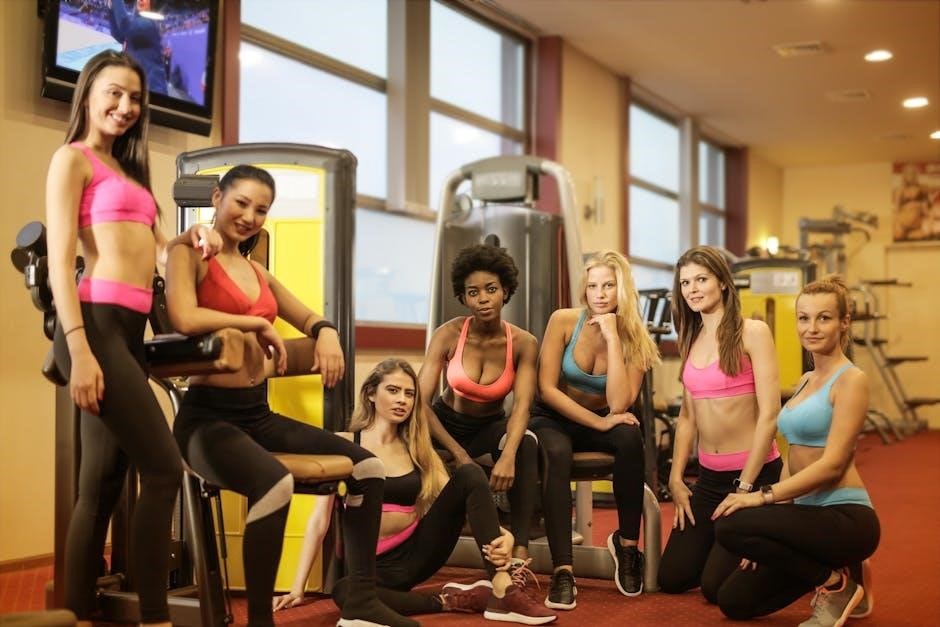
Sample Weekly Workout Schedule (PDF Focus)
A well-structured PDF workout plan provides clarity and consistency. Consider a schedule incorporating strength training (3 days/week), cardio (2-3 days/week), and active recovery (1-2 days/week). Monday: Lower Body Strength. Wednesday: Upper Body Strength. Friday: Full Body Circuit. Tuesday/Thursday: HIIT or LISS Cardio. Saturday: Active Recovery (yoga, walking). Sunday: Rest.
Prioritize progressive overload – gradually increasing weight, reps, or sets. A downloadable PDF allows for easy tracking and adjustments. Remember to include warm-up and cool-down routines. This sample is a starting point; personalize it based on fitness level and goals. Consistency is key for achieving lasting results with your women’s gym workout plan.